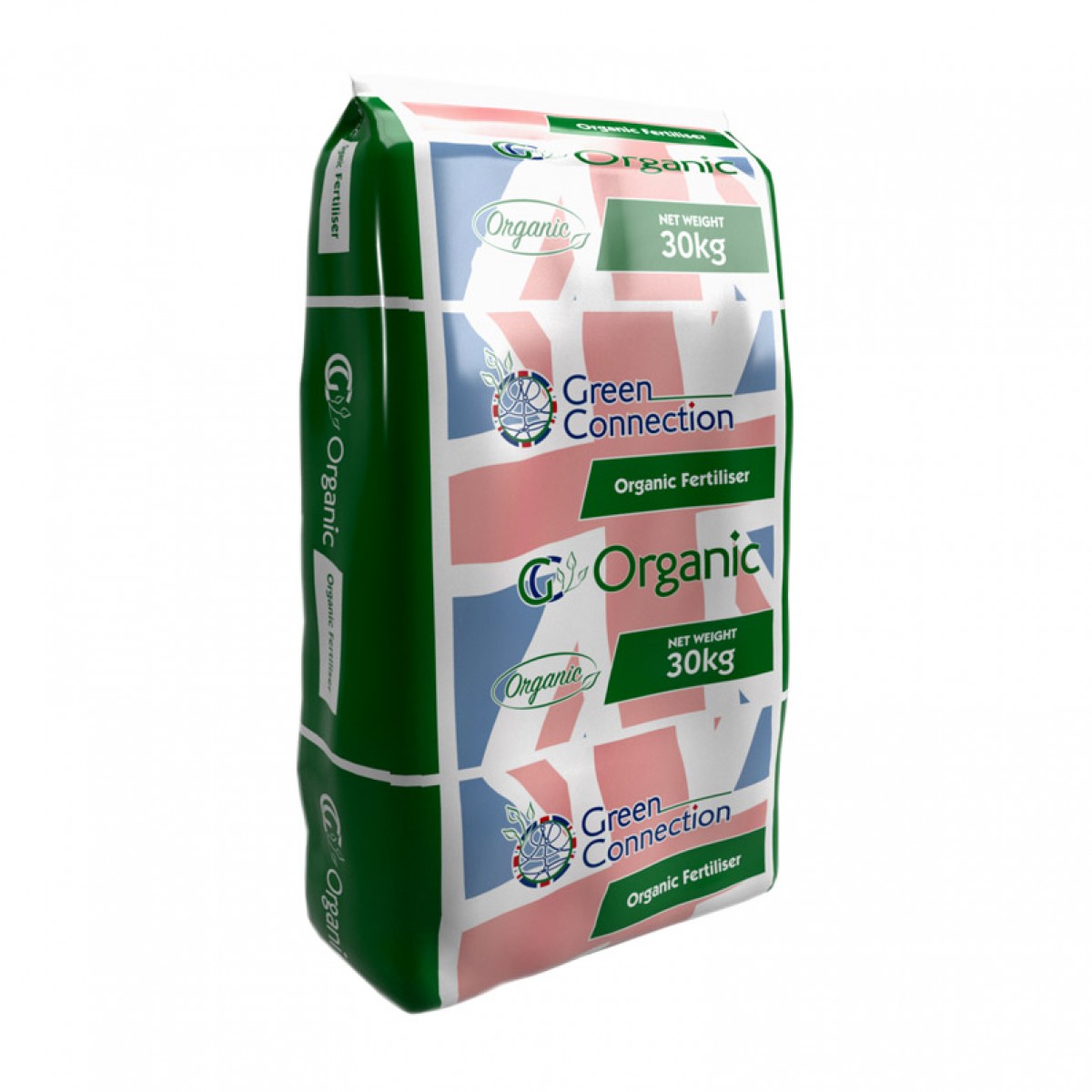
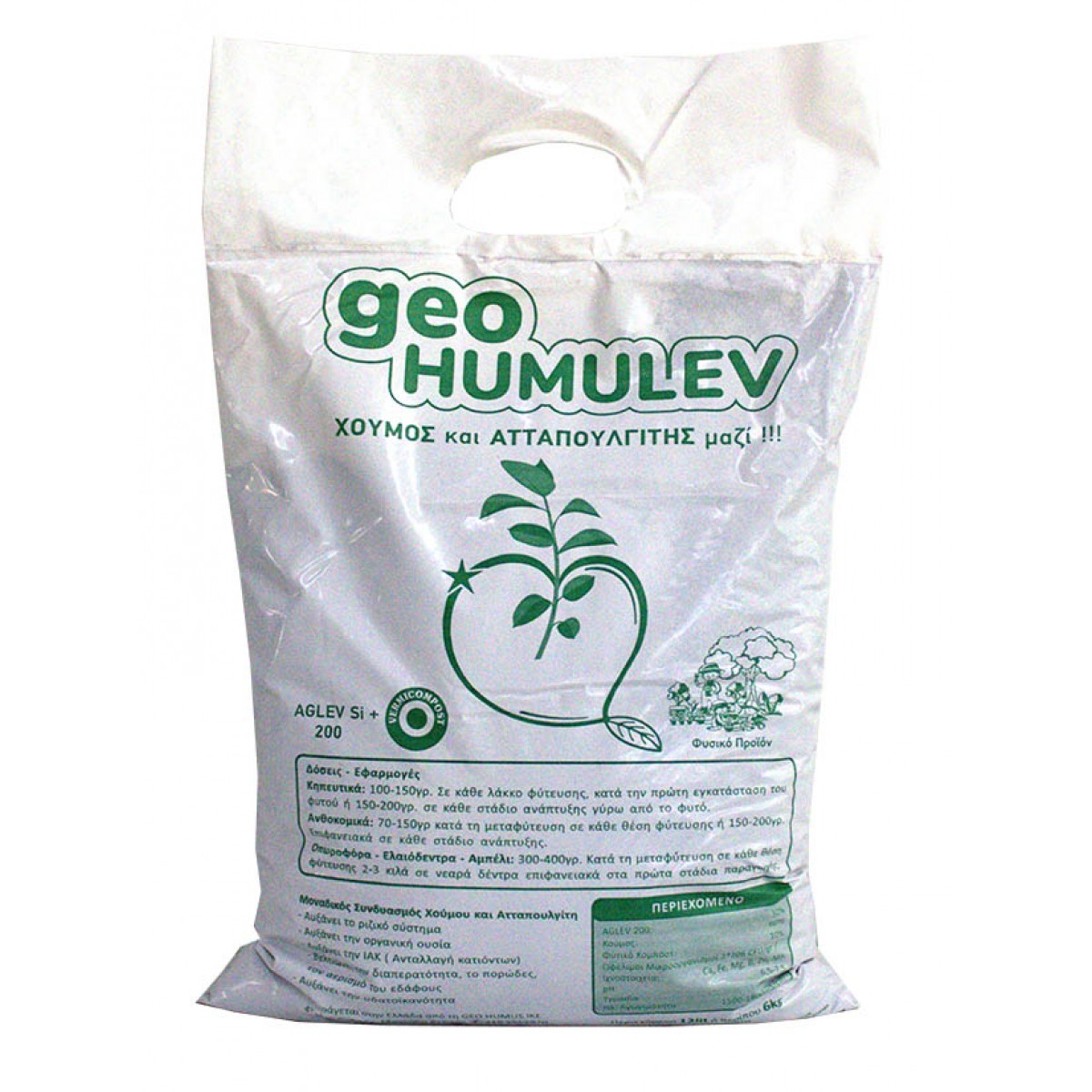
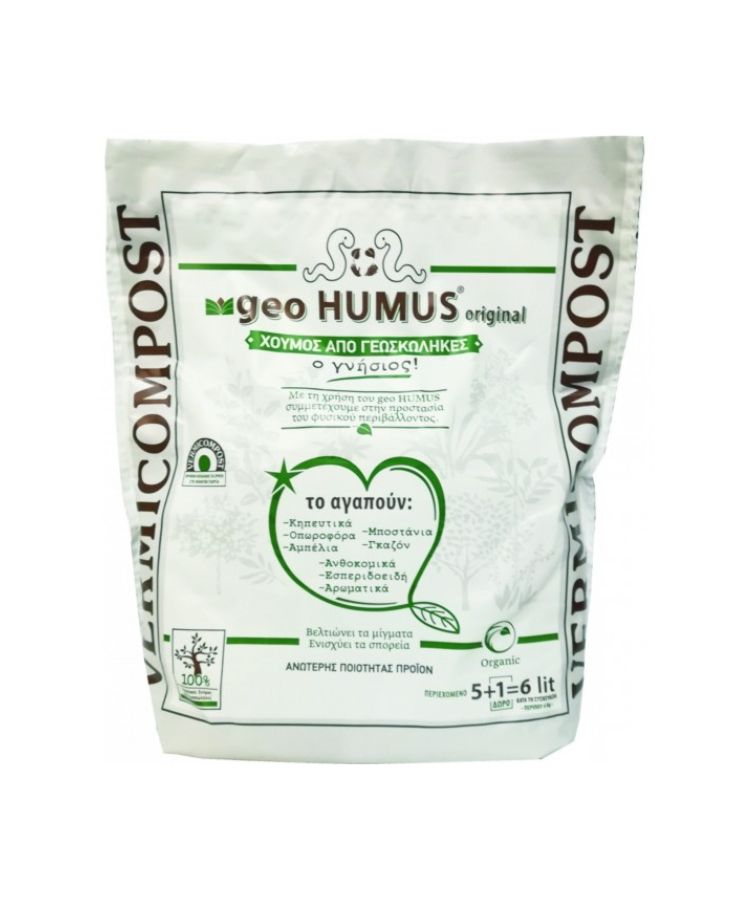
Organic Fertilizer
Vermicompost
- Increase Soil Fertility
- Water Holding Capacity
- Nutrient supply
- Better Soil Structure
- Enhances Root GrowthBiological Function
What is geoHUMUS® Vermicompost used for?
Geo HUMUS is an organic fertilizer and soil conditioner. The raw materials used for its production are 100% natural. It undergoes a process known as vermicomposting in which two specific types of earthworms, Eisenia fetida και Eisenia andrei , process the starting material to produce fine humus.
The final product is rich in humic acids, trace elements, plant hormones and, above all, beneficial microorganisms, which make it an excellent soil conditioner.
Use – Dosages
Vegetables-Vegetables-Strawberries-Watermelon-Melon : 100 – 150 grams in each planting pit, during the first installation of the plant,
150 – 200 grams at each stage of growth around the plant.
Apples-Dome Fruits-Citrus Fruits-Olives-Pomegranates : 300 – 400 grams during transplanting at each planting location
, 1 – 2 kilos on young trees, superficially with good incorporation in the early stages of production.
Floriculture-Aromatic-Herbs-Tobacco: 70-100g at each planting location, during the first installation and after 1 month repeat
100 – 120g (depending on the size of the plant or pot) superficially at each stage of growth (2 applications/growing season)
Grapevines-Kiwis 300 – 400 g. during transplanting at each planting location
500g – 1 kg on young trees, superficially with good incorporation in the early stages of
Mixtures:
50 – 150 litres per cubic meter
How does it affect soil
geoHUMUS® Vermicompost provides (relatively low content of N, P and K) but its value as a biological fertilizer should not be assessed only by the content of these elements but mainly by the degree of availability of all its nutrients to plants.
This soil conditioner also contains elements such as Mg, Na and S, as well as some trace elements that are rarely found in mineral fertilizers, but play an important role in plant nutrition.
The nitrogen contained in it is slow-release (as in all organics), does not exist in toxic concentrations, nor is it lost through leaching. It has a positive effect on the physicochemical and biological properties of the soil such as soil aeration, water retention, permeability and soil structure.
Increases the amount of organic matter in the soil, the rate and density of root growth, micro-macronutrient activity as well as microflora
geoHUMUS creates a more stable pH and enriches with chelated trace elements.
It enriches the soil with microorganisms and accelerates plant metabolic processes such as transpiration, photosynthesis, sugar distribution and protein synthesis.